Boosting Back-of-Store Efficiency: A 3-Month Action Plan
Boosting Back-of-Store Efficiency: A 3-Month Action Plan to Improve Processing by 30%
In the fast-paced world of retail, the front of the store often gets all the glory, but it’s the efficient functioning of the back-of-store that truly underpins success. From receiving shipments to managing inventory, and from preparing products for the sales floor to handling returns, the back-of-store is a critical hub of activity. Operational bottlenecks in this area can lead to a cascade of problems: lost sales, dissatisfied customers, increased labor costs, and ultimately, reduced profitability. This article outlines a comprehensive 3-month plan designed to significantly improve your back-of-store efficiency, aiming for a remarkable 30% improvement in processing capabilities.
Achieving such an ambitious goal requires a systematic approach, a commitment to change, and the right tools. We’ll delve into understanding current challenges, implementing strategic improvements, and leveraging technology to transform your back-of-store operations. By focusing on key areas such as process optimization, staff training, and data-driven decision-making, you can unlock substantial gains in productivity and profitability.
The Critical Role of Back-of-Store Efficiency
Before we dive into the action plan, it’s crucial to understand why back-of-store efficiency is so vital. It’s not just about moving boxes; it’s about optimizing the entire flow of goods from supplier to customer. A well-oiled back-of-store directly impacts:
- Customer Satisfaction: Faster stocking means products are available when customers want them, reducing out-of-stocks and improving the shopping experience.
- Sales Performance: Available products directly translate to sales. Efficient processing ensures shelves are always full and promotions are adequately supported.
- Labor Costs: Streamlined processes reduce the time staff spend on non-selling activities, allowing them to focus on customer service or other value-added tasks.
- Inventory Accuracy: Better receiving and tracking lead to more accurate inventory counts, minimizing discrepancies and preventing costly errors like overstocking or understocking.
- Shrinkage Reduction: Organized back-of-store operations can help deter theft and damage, contributing to a healthier bottom line.
- Supply Chain Resilience: An efficient back-of-store can better adapt to supply chain disruptions, ensuring continuous product flow.
Ignoring this critical area is akin to trying to drive a car with a faulty engine – no matter how shiny the exterior, performance will suffer. Our 3-month plan is designed to overhaul that engine, making your retail operations run smoother and more profitably.
Month 1: Assessment and Foundation Building
The first month is dedicated to understanding your current state, identifying specific pain points, and laying the groundwork for change. This phase is crucial for establishing a baseline and setting realistic, measurable goals for improving back-of-store efficiency.
Week 1-2: Comprehensive Process Audit and Bottleneck Identification
Begin by mapping out every step of your current back-of-store processes. This includes:
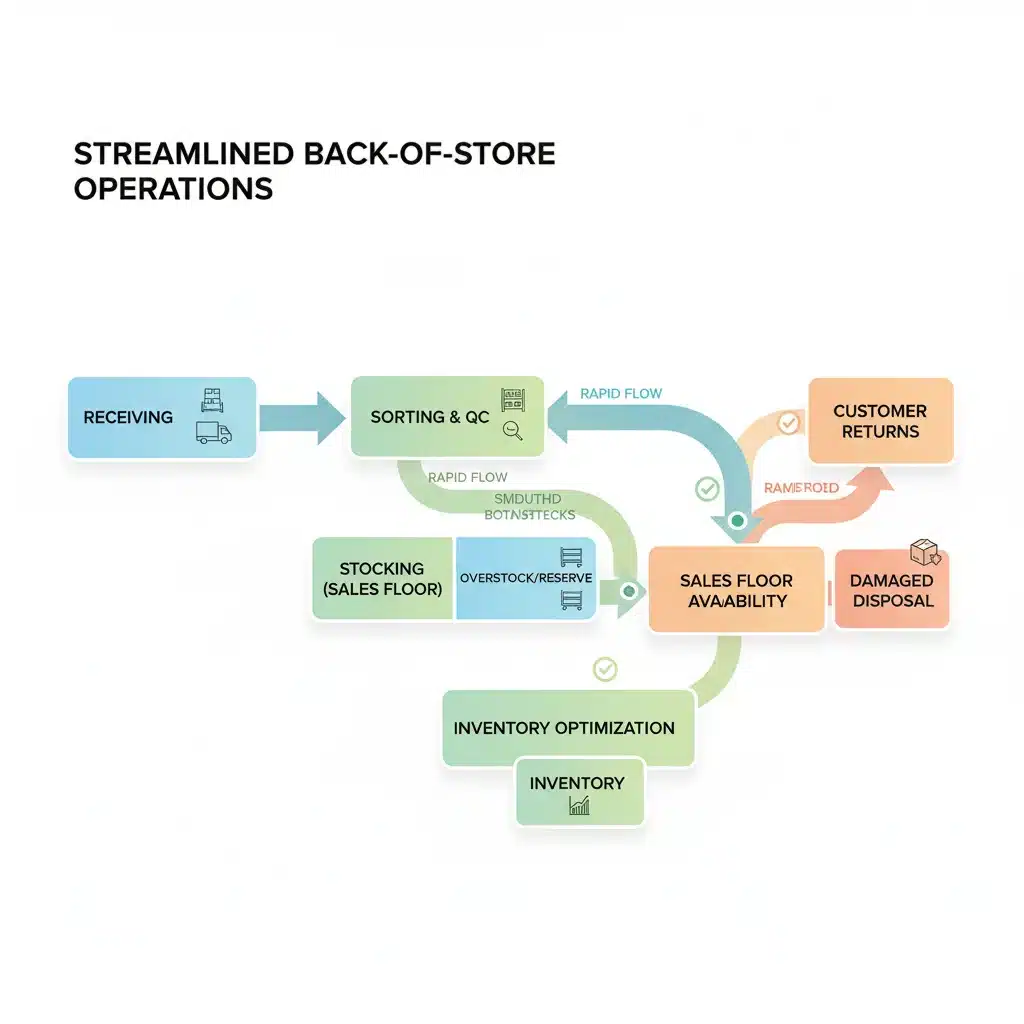
- Receiving: From truck arrival to product put-away. Document timings, resources used, and common issues (e.g., mismatched invoices, damaged goods).
- Stocking/Replenishment: How products move from the back-of-store to the sales floor. Identify delays, manual steps, and communication breakdowns.
- Returns Processing: The journey of returned items, including inspection, restocking, or vendor return.
- Inventory Management: How inventory is tracked, counted, and reconciled.
- Waste Management: How packaging and other waste are handled.
Tools for Audit:
- Time and Motion Studies: Observe staff performing tasks and record the time taken for each step.
- Staff Interviews: Talk to employees at all levels. They often have the best insights into inefficiencies and potential solutions.
- Process Flowcharts: Visually represent each process to easily spot redundancies, unnecessary steps, or bottlenecks.
- Data Analysis: Review existing data on receiving times, stockouts, inventory discrepancies, and labor hours spent in the back-of-store.
Goal for Weeks 1-2: Create a detailed report identifying the top 3-5 most significant bottlenecks causing delays and inefficiencies. Quantify their impact where possible (e.g., "receiving takes 2 hours longer than industry average").
Week 3-4: Goal Setting, Team Training & Technology Review
Based on your audit, establish clear, measurable, achievable, relevant, and time-bound (SMART) goals for the 30% improvement target. For example, "Reduce average receiving time by 20% within 3 months" or "Decrease inventory discrepancies by 15% in 90 days."
Initial Staff Training & Engagement:
Engage your team early. Conduct workshops to explain the initiative, share audit findings, and solicit their input on potential solutions. Provide initial training on best practices for organization, safety, and basic equipment usage. A motivated team is key to successful implementation.
Technology and Equipment Assessment:
Evaluate your current technology stack and equipment. Do you have:
- Modern POS systems with integrated inventory management?
- Handheld scanners for efficient receiving and cycle counting?
- Appropriate shelving, dollies, and forklifts (if applicable) for safe and efficient material handling?
- Software for demand forecasting and automated reordering?
Identify critical gaps. This doesn’t necessarily mean immediate large investments, but understanding what’s missing will inform future decisions.
Month 2: Implementation and Optimization
With a clear understanding of your challenges and goals, Month 2 is all about taking action and implementing the changes identified in the assessment phase to enhance back-of-store efficiency.
Week 5-6: Process Redesign and Standardization
This is where you redesign the inefficient processes identified in Month 1. Focus on:
- Lean Principles: Eliminate waste (e.g., unnecessary movement, waiting times, over-processing).
- Standard Operating Procedures (SOPs): Develop clear, step-by-step SOPs for all back-of-store tasks. This ensures consistency, reduces errors, and simplifies training for new staff.
- Layout Optimization: Reconfigure your back-of-store layout to minimize travel time and improve flow. Place frequently accessed items closer to the sales floor, create dedicated receiving and staging areas.
- Batch Processing: Can certain tasks be batched for efficiency? For example, processing all incoming shipments at a specific time each day rather than ad hoc.
Example: Streamlining Receiving
Instead of manual checks, implement a system where a single scan of a barcode on a delivery manifest can confirm receipt against a purchase order, automatically update inventory, and print shelf labels. This drastically reduces manual data entry and potential errors, significantly boosting back-of-store efficiency.
Week 7-8: Technology Integration and Advanced Training
If your budget allows and the assessment highlighted critical technology gaps, this is the time to implement new tools or upgrade existing ones. Even small investments can yield big returns.
- Handheld Scanners/Mobile Devices: Equip staff with devices that allow for real-time inventory updates, cycle counting, and efficient product location.
- Inventory Management Software (IMS) Upgrades: Ensure your IMS can handle real-time data, integrate with POS, and provide robust reporting.
- Automated Replenishment Systems: Explore systems that automatically suggest reorder points based on sales data and lead times.
Advanced Staff Training: Provide in-depth training on the new SOPs and any new technology implemented. Hands-on practice and clear demonstrations are essential. Emphasize why these changes are being made and how they benefit the team and the store.
Month 3: Performance Monitoring and Continuous Improvement
The final month focuses on solidifying the changes, measuring the impact, and establishing a culture of continuous improvement to sustain high levels of back-of-store efficiency.
Week 9-10: Performance Tracking and Feedback Loops
Start rigorously tracking the metrics established in Month 1. Compare current performance against your baseline. Key Performance Indicators (KPIs) to monitor include:
- Average time for receiving and processing a shipment.
- Time to move products from back-of-store to sales floor.
- Inventory accuracy percentage (via regular cycle counts).
- Number of out-of-stock items (on the sales floor due to back-of-store delays).
- Labor hours spent per unit processed in the back-of-store.
- Return processing time.
Establish Feedback Loops: Regularly meet with your back-of-store team to discuss performance, identify any new challenges, and gather suggestions for further improvements. What’s working? What’s not? Are the new SOPs clear and effective?
Week 11-12: Refinement, Scaling, and Future Planning
Based on the performance data and team feedback, make necessary adjustments to processes or training. This iterative refinement is crucial for long-term success.
- Celebrate Successes: Acknowledge and reward the team’s efforts and the improvements achieved. This boosts morale and reinforces positive changes.
- Document Best Practices: Formalize the successful new processes as standard operating procedures that can be used for future training and across multiple locations if applicable.
- Plan for Future Enhancements: Even after achieving your 30% improvement, operational excellence is an ongoing journey. Plan for quarterly reviews and consider future investments in automation or advanced analytics to further boost back-of-store efficiency.
- Cross-functional Collaboration: Ensure smooth communication and collaboration between the back-of-store team, sales floor staff, and management. For instance, sales staff can provide valuable input on product placement and replenishment needs.

Key Strategies for Sustained Back-of-Store Efficiency
Beyond the 3-month plan, several overarching strategies will ensure your back-of-store efficiency remains high:
1. Invest in Your People
Your staff are your greatest asset. Continuous training, clear communication, and empowering them to suggest improvements will foster a culture of ownership and efficiency. Cross-training employees on various back-of-store tasks can also increase flexibility and reduce reliance on a single individual for critical functions.
2. Embrace Technology
From simple barcode scanners to sophisticated warehouse management systems (WMS), technology can automate mundane tasks, provide real-time visibility, and offer data-driven insights. Cloud-based solutions can be particularly beneficial for scalability and accessibility. Consider:
- RFID Technology: For rapid inventory counts and tracking.
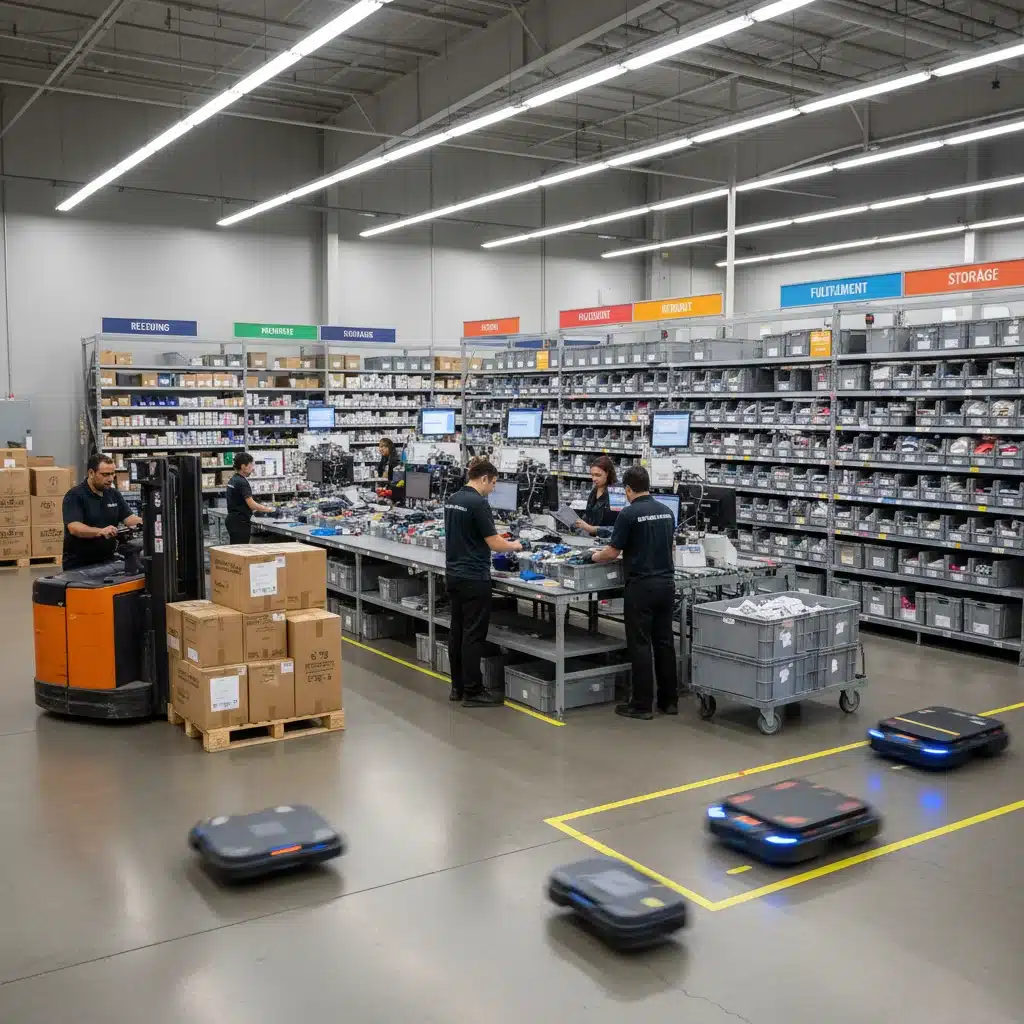
- Robotics/Automation: For larger operations, automated guided vehicles (AGVs) can move heavy loads or assist with sorting.
- Advanced Analytics: To predict demand, optimize stocking levels, and identify emerging trends.
3. Optimize Space Utilization
The back-of-store is often a confined space. Efficient use of vertical space, modular shelving, and clear pathways can significantly improve flow and storage capacity. Regular decluttering and organization (e.g., using 5S methodology – Sort, Set in Order, Shine, Standardize, Sustain) are essential.
4. Foster Strong Vendor Relationships
Collaborate with your suppliers. Can they pre-sort shipments? Can they provide advanced shipping notices (ASNs) with detailed carton contents? Better communication with vendors can dramatically smooth the receiving process and reduce the workload in your back-of-store.
5. Prioritize Safety
An organized and efficient back-of-store is also a safer one. Clear aisles, proper lifting techniques, and well-maintained equipment reduce the risk of accidents and injuries, which can otherwise disrupt operations and incur costs.
6. Data-Driven Decision Making
Make every decision based on data. Track KPIs rigorously, analyze trends, and use insights to continually refine processes. This proactive approach ensures that improvements are sustained and adapted as business needs evolve.
Common Pitfalls to Avoid
While striving for improved back-of-store efficiency, be mindful of these common traps:
- Lack of Employee Buy-in: Without involving your team, new processes are likely to fail.
- One-Size-Fits-All Solutions: What works for one store or department might not work for another. Tailor solutions to your specific needs.
- Ignoring Data: Relying on gut feelings instead of hard data for decision-making.
- Setting Unrealistic Goals: While ambitious, goals must be achievable to maintain morale.
- Failing to Follow Up: Initial improvements can quickly revert if there’s no ongoing monitoring and reinforcement.
- Underestimating the Impact of Small Changes: Even minor tweaks can add up to significant overall improvements.
Conclusion: A Path to Greater Profitability and Customer Satisfaction
Transforming your back-of-store operations is not an overnight task, but with a structured 3-month plan, a 30% improvement in processing is an entirely achievable goal. By diligently assessing current processes, strategically implementing changes, and fostering a culture of continuous improvement, your retail business can unlock significant benefits. Enhanced back-of-store efficiency translates directly into reduced costs, increased sales, and ultimately, a superior customer experience. Start today, and watch your retail operations thrive!