Retail Media Networks: Unlocking U.S. Brand Revenue Growth by 2028

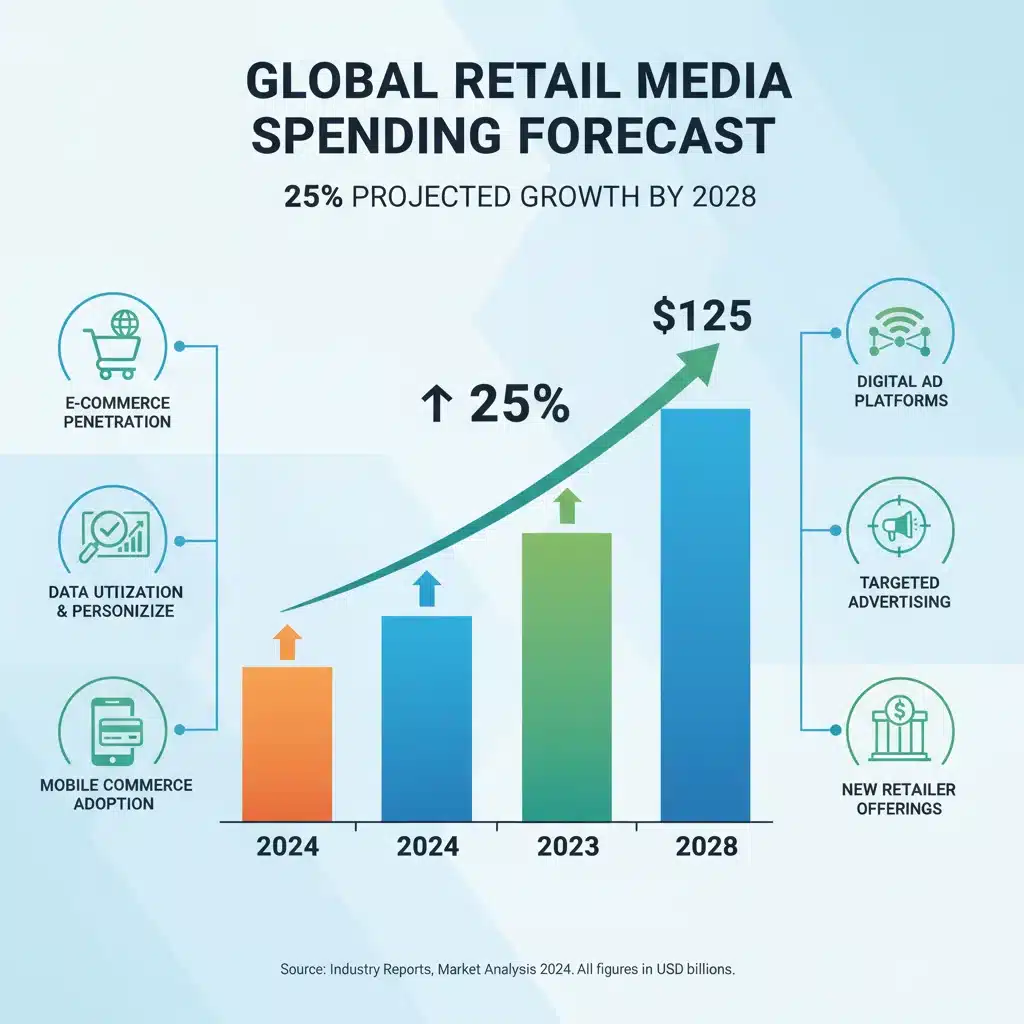
In the dynamic landscape of modern commerce, a powerful force is reshaping how brands connect with consumers and drive sales: retail media networks. For U.S. brands, this isn’t just another advertising channel; it’s a strategic imperative poised to unlock significant new revenue streams. With a projected 25% growth by 2028, retail media networks are no longer an emerging trend but a dominant pillar of digital advertising, demanding attention and strategic investment from every forward-thinking enterprise.
The rise of retail media is fundamentally altering the advertising ecosystem. Traditionally, brands relied on broad-reach advertising to capture consumer attention. However, with the proliferation of e-commerce and the increasing sophistication of data analytics, retailers are transforming their vast troves of first-party customer data into highly targeted advertising platforms. This shift empowers brands to reach consumers directly at the point of purchase, influencing decisions precisely when they matter most. The implications for revenue generation, market share, and brand loyalty are profound.
This comprehensive guide will delve into the intricacies of retail media networks, exploring their mechanics, benefits, challenges, and the strategic approaches U.S. brands can adopt to harness their full potential. We will examine why this sector is experiencing such explosive retail media growth and how businesses can position themselves to capitalize on this transformative opportunity.
Understanding the Retail Media Phenomenon: What Drives Retail Media Growth?
At its core, a retail media network is an advertising platform operated by a retailer, leveraging its first-party customer data, e-commerce sites, and physical store presence to offer advertising opportunities to brands. Think of it as a retailer becoming a media company, selling ad space and targeting capabilities to its suppliers and other relevant brands. This model has several key advantages that contribute to its rapid retail media growth.
The Power of First-Party Data
The most significant driver behind retail media’s ascendancy is the unparalleled access to first-party data. Unlike third-party cookies, which are facing deprecation, first-party data is collected directly by the retailer from its customers’ shopping behaviors, preferences, and purchase histories. This data is incredibly rich, accurate, and privacy-compliant, allowing brands to execute highly targeted campaigns with exceptional precision. Imagine targeting an ad for a new brand of organic pasta directly to customers who frequently purchase organic groceries or who have recently bought similar products. This level of granular targeting dramatically increases campaign effectiveness and return on ad spend (ROAS).
Proximity to Purchase
Another critical factor is the proximity to purchase. Retail media ads appear directly on the retail website, app, or even in-store, placing them squarely in the consumer’s path to purchase. This ‘lower-funnel’ advertising is incredibly effective because it captures consumer attention when they are actively browsing products and making buying decisions. Whether it’s a sponsored product listing appearing at the top of a search result, a banner ad on a category page, or an advertisement on a digital screen in a physical store, these placements directly influence conversion rates. This immediate impact on sales is a compelling reason for brands to invest in retail media.
Diverse Ad Formats and Channels
Retail media networks offer a diverse array of ad formats, catering to various marketing objectives. These include:
- Sponsored Product Listings: Prominent placement of products in search results and category pages.
- Display Ads: Banner ads on retail websites, apps, and even off-site through programmatic extensions.
- Search Ads: Ads that appear when consumers search for specific products or keywords on the retailer’s platform.
- Video Ads: Engaging video content integrated into the shopping experience.
- In-Store Media: Digital screens, audio ads, and interactive displays within physical retail locations.
This multi-channel approach allows brands to create cohesive campaigns that span the entire customer journey, from awareness to conversion, further fueling retail media growth.
The Economic Imperative: Why U.S. Brands Must Embrace Retail Media
The projected 25% growth by 2028 is not merely an optimistic forecast; it reflects a fundamental shift in how advertising budgets are allocated. For U.S. brands, embracing retail media is no longer optional but a strategic necessity for several compelling reasons.
Diversifying Revenue Streams
For retailers, retail media networks represent a significant new revenue stream, diversifying their business beyond traditional product sales. This additional income can be reinvested into improving the customer experience, technology, or supply chain, creating a virtuous cycle. For brands, it means access to highly engaged audiences and a direct path to sales, translating into improved ROI and predictable revenue growth.
Responding to Privacy Changes
With increasing privacy regulations (like GDPR and CCPA) and the impending deprecation of third-party cookies, traditional digital advertising methods are facing significant headwinds. Retail media, built on first-party data, offers a privacy-centric alternative that maintains targeting effectiveness without relying on deprecated identifiers. This makes it a future-proof advertising solution for brands navigating an evolving privacy landscape.
Competitive Advantage
Brands that effectively leverage retail media networks gain a significant competitive edge. By appearing prominently in relevant search results and product pages, they capture mindshare and market share from competitors who are slower to adapt. Early adopters can establish strong relationships with key retail partners, securing preferential ad placements and data insights that can be difficult for latecomers to replicate.
Measurable Performance and Attribution
One of the most attractive aspects of retail media is its inherent measurability. Because ads are served within the retailer’s ecosystem, brands can gain direct insights into campaign performance, including impressions, clicks, sales, and ROAS. This closed-loop attribution allows for precise optimization and a clear understanding of advertising effectiveness, a stark contrast to the often-fuzzy attribution models of traditional advertising.
Strategic Approaches for U.S. Brands to Maximize Retail Media Growth
To truly unlock the revenue potential of retail media, U.S. brands need a well-defined strategy. It’s not enough to simply allocate budget; effective execution requires careful planning and continuous optimization.
1. Deep Dive into Retailer-Specific Data and Capabilities
Each retail media network is unique. Brands must invest time in understanding the specific data segments, targeting options, ad formats, and measurement capabilities offered by each retailer. A campaign that performs well on Amazon might need significant adjustments for Walmart Connect or Instacart. Tailoring strategies to individual platforms is crucial for maximizing retail media growth.
2. Optimize Product Content and Listings
Retail media amplifies the visibility of products, but visibility alone isn’t enough. High-quality product images, detailed descriptions, compelling bullet points, and positive customer reviews are essential for converting clicks into sales. Brands should view retail media as an extension of their product content strategy, ensuring that advertised products are presented in the best possible light.
3. Implement a Full-Funnel Strategy
While retail media excels at lower-funnel conversions, it can also be used for upper-funnel objectives like brand awareness and consideration. Brands should develop a comprehensive strategy that uses different ad formats and targeting options across the customer journey. For example, display ads on category pages can build awareness, while sponsored product listings drive conversions.
4. Embrace A/B Testing and Continuous Optimization
The beauty of digital advertising, including retail media, lies in its ability to be measured and optimized in real-time. Brands should continuously A/B test different ad creatives, targeting parameters, bidding strategies, and product placements. Analyzing performance data and making iterative improvements is key to sustained retail media growth.
5. Integrate with Overall Marketing Efforts
Retail media should not operate in a silo. It should be seamlessly integrated with a brand’s broader marketing strategy, including social media, email marketing, and traditional advertising. Consistent messaging and a unified brand experience across all touchpoints will enhance the effectiveness of retail media campaigns.
6. Build Strong Retailer Relationships
Developing strong, collaborative relationships with retail partners is paramount. This can lead to early access to new features, better insights into consumer behavior, and opportunities for co-created campaigns. Retailers are invested in the success of their brand partners, and fostering these relationships can unlock exclusive advantages.
Challenges and Considerations for U.S. Brands in Retail Media
While the opportunities for retail media growth are immense, U.S. brands must also be aware of potential challenges and considerations.
Fragmented Landscape
The retail media landscape is becoming increasingly fragmented, with every major retailer launching its own network. Managing campaigns across multiple platforms, each with its unique interface and reporting, can be complex and resource-intensive. Brands may need to invest in specialized ad tech solutions or agency partnerships to navigate this complexity effectively.
Data Silos and Integration
While retailers offer rich first-party data, integrating this data with a brand’s own CRM and marketing analytics platforms can be challenging. Achieving a holistic view of customer behavior across all channels requires robust data integration capabilities and a clear strategy for data governance.
Cost and Budget Allocation
As retail media becomes more competitive, advertising costs can rise. Brands need to carefully allocate budgets, ensuring that investments in retail media deliver a strong ROAS. This requires sophisticated bidding strategies and a clear understanding of the incremental value generated by each campaign.
Attribution Complexity
While retail media offers excellent internal attribution, understanding its broader impact on overall sales and brand equity can still be complex. Brands need to develop sophisticated attribution models that consider the interplay between retail media and other marketing channels to accurately assess its true value.
The Future of Retail Media: What’s Next for U.S. Brands?
The trajectory of retail media growth indicates a future filled with innovation and expanded capabilities. U.S. brands should keep an eye on several key trends:
Expansion into Offline Channels
While e-commerce has been the primary driver, retail media is increasingly extending into physical stores. Digital screens, smart shelves, and even audio advertising within brick-and-mortar locations will offer new avenues for brands to reach consumers at the point of decision, blurring the lines between online and offline commerce.
Advanced Personalization and AI
The use of artificial intelligence and machine learning will become even more sophisticated, enabling hyper-personalized ad experiences. AI will analyze vast datasets to predict consumer intent, optimize ad placements in real-time, and even generate dynamic ad creative tailored to individual preferences, further accelerating retail media growth.
Closed-Loop Measurement and Enhanced Analytics
As retail media evolves, so too will its measurement capabilities. Brands can expect even more granular insights into campaign performance, including lifetime value (LTV) and customer retention metrics. Enhanced analytics will provide a clearer picture of the long-term impact of retail media investments.
Supply Chain and Inventory Integration
Future retail media platforms may integrate more deeply with a brand’s supply chain and inventory data. This could enable ads to be dynamically adjusted based on product availability, preventing out-of-stock promotions and optimizing ad spend for products that are readily available, leading to more efficient retail media growth.
Case Studies: Real-World Retail Media Growth Success
To illustrate the power of retail media, let’s consider a couple of hypothetical, yet representative, scenarios:
Case Study 1: A CPG Brand’s Breakthrough
A new organic snack brand, struggling to gain shelf presence and awareness in a crowded market, partnered with a major grocery retailer’s media network. By leveraging the retailer’s first-party data, they targeted consumers who frequently purchased organic products, healthy snacks, or had previously bought from challenger brands. Through a combination of sponsored product listings and display ads on relevant category pages, the brand saw a 150% increase in online sales within three months and secured prime physical shelf space due to demonstrated digital performance. This directly contributed to substantial retail media growth for the brand.
Case Study 2: An Electronics Manufacturer’s Targeted Launch
An electronics manufacturer was launching a new smart home device. Instead of broad advertising, they utilized a leading electronics retailer’s media platform to target customers who had recently purchased smart home devices, gaming consoles, or high-end electronics. They ran video ads showcasing the device’s features, followed by sponsored product placements on search results for related keywords. This targeted approach resulted in a 30% higher conversion rate compared to their traditional digital campaigns and a significant boost in pre-orders, demonstrating efficient retail media growth.
Implementing a Robust Retail Media Strategy: Practical Steps for U.S. Brands
For U.S. brands ready to dive deeper into retail media, here are actionable steps to build a robust and effective strategy:
1. Conduct a Retail Media Audit
Start by assessing your current presence and performance on key retail platforms. Identify which retailers offer media networks relevant to your products and target audience. Analyze existing ad spend, performance metrics, and competitor activity within these ecosystems. This audit will provide a baseline and highlight immediate opportunities for retail media growth.
2. Define Clear Objectives and KPIs
Before launching any campaign, clearly define your objectives. Are you aiming for increased sales, brand awareness, new customer acquisition, or market share growth? Establish specific Key Performance Indicators (KPIs) to measure success, such as ROAS, conversion rate, click-through rate (CTR), or incremental sales. Clear objectives will guide your strategy and allow for accurate measurement of retail media growth.
3. Allocate Dedicated Resources
Retail media management requires specialized skills and dedicated resources. Brands should consider investing in internal talent, training existing teams, or partnering with agencies that have expertise in retail media platforms. Treating retail media as a distinct and critical marketing channel, rather than an afterthought, is essential for maximizing its potential.
4. Leverage Data-Driven Insights
Regularly analyze the performance data provided by retail media networks. Look beyond top-line metrics to understand customer behavior, product affinities, and search trends. Use these insights to refine your targeting, optimize ad copy, and identify new product opportunities. Data is the fuel for sustained retail media growth.
5. Experiment and Innovate
The retail media landscape is constantly evolving. Brands should foster a culture of experimentation, testing new ad formats, bidding strategies, and creative approaches. Stay informed about new features and capabilities offered by retail partners and be willing to innovate to maintain a competitive edge and drive continuous retail media growth.
6. Prioritize Compliance and Transparency
As privacy concerns grow, ensuring compliance with data protection regulations is paramount. Brands should work closely with retailers to understand their data privacy policies and ensure that all advertising activities are transparent and ethical. Building trust with consumers and regulatory bodies is crucial for the long-term viability of retail media initiatives.
Conclusion: Seizing the Retail Media Opportunity for U.S. Brands
The projected 25% retail media growth by 2028 is a clear indicator of its transformative power for U.S. brands. By offering unparalleled access to first-party data, proximity to purchase, and measurable results, retail media networks provide a potent avenue for unlocking new revenue streams and achieving significant market advantages. While challenges exist, a strategic, data-driven, and adaptable approach will enable brands to navigate this complex landscape successfully.
For U.S. brands, the time to invest in and optimize their retail media strategies is now. Those who embrace this shift will not only diversify their revenue streams but also build stronger customer relationships, enhance brand visibility, and secure a dominant position in the increasingly competitive digital marketplace. The future of commerce is inextricably linked with retail media, and brands that master this domain will be well-positioned for sustained success and exponential retail media growth in the years to come.